Last reviewed: 15 August 2026
Dog Walker Insurance UK: Real Costs, Cover Levels and What Councils Require
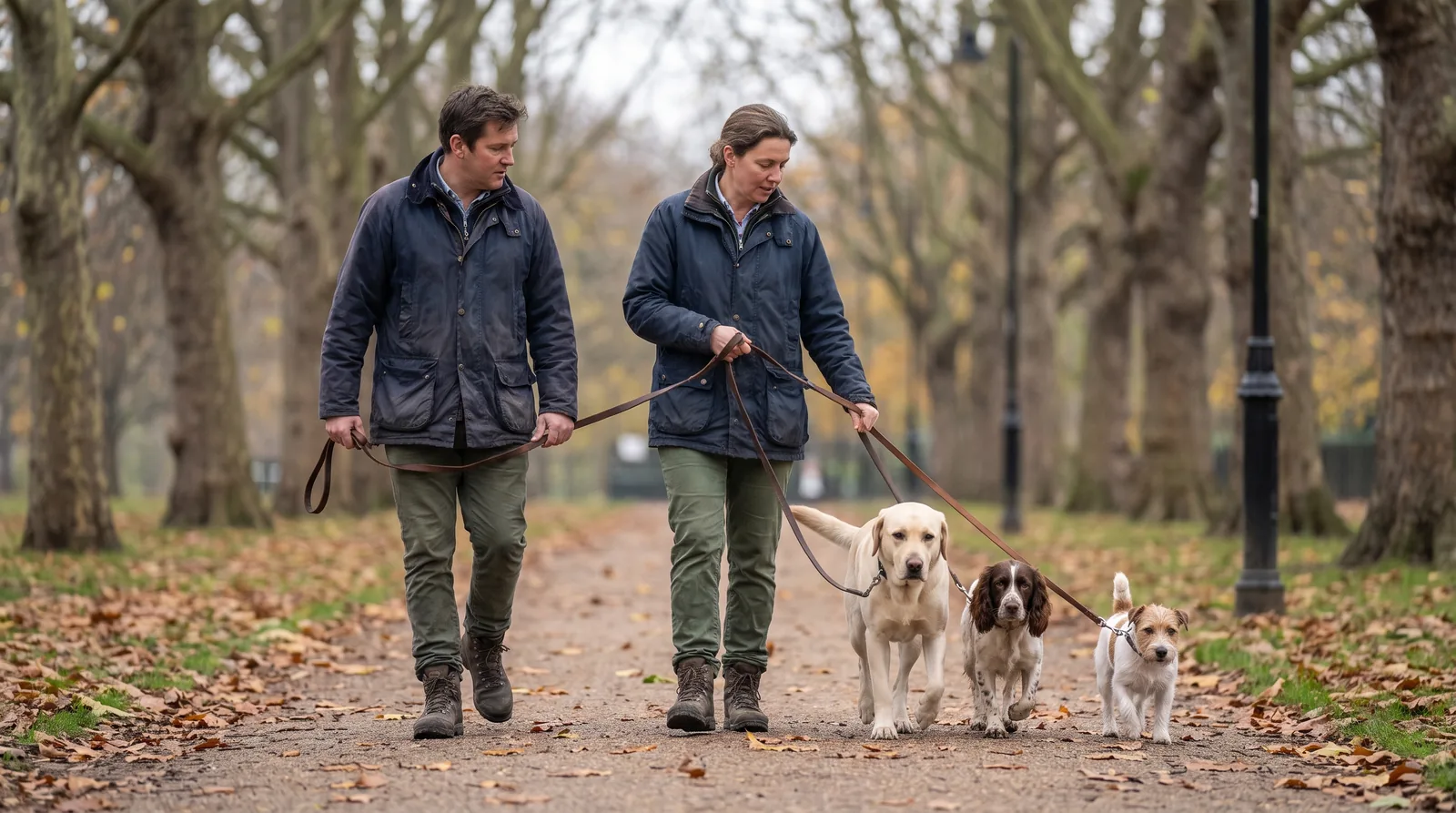
Dog walker public liability insurance starts from as little as £5.05 a month (Simply Business) and runs up to £135.05 a year (Cliverton) for a full commercial policy, based on prices each provider publishes on its own website today. Where you land in that range depends mostly on your cover level, whether you have employees, and how many dogs you handle at once — not on the provider's brand name.
Get your dog walking insurance estimate
Free, indicative estimate based on publicly advertised starting prices. Not a personalised quote — see how this is calculated.
Estimated annual premium range
£61 – £135
Based on advertised starting prices, not a personalised quote.
How much does dog walker insurance cost in 2026?
Every figure below was checked directly on the provider's own website — not pulled from an old comparison article — with the exact wording and a link to the source page. None of these is an "average": each is the starting price the provider itself advertises today.
| Provider | Advertised starting price | Notes | |
|---|---|---|---|
| Simply Business | from £5.05/month · source | 10% of customers paid this or less, up to £2m public liability | Get a quote → |
| Protectivity | from £5.41/month · source | Specialist pet business insurer | Get a quote → |
| Pet Business Insurance | £1.57/week (£6.81/month) · source | Weekly pricing option available | Get a quote → |
| Cliverton | from £135.05/year · source | Monthly payment option available | Get a quote → |
Prices verified directly on each provider's website on 2 August 2026. Providers change pricing without notice — always confirm on their site before buying.
For context, comparison site MoneySuperMarket reports a market average of £81 a year and a cheapest-found figure of £78.25 — their data, not ours, and worth treating as a general market signal rather than a quote. We don't yet have our own study of real quotes across providers; see our methodology for exactly what that means and when it's coming.
What affects your premium
The price you're quoted moves on a handful of factors that matter far more than which brand you pick:
- Number of dogs walked at once. A solo walker with 2-3 dogs pays less than someone regularly walking 8-10.
- Added services. Boarding, home sitting or overnight stays usually push you into a higher-risk (and higher-cost) category than dog walking alone.
- Annual turnover. Higher declared revenue generally means a higher premium, since claims exposure scales with business size.
- Employees. The moment you take on staff, you also need employers' liability insurance — a legal requirement, not an optional extra.
- Claims history. A clean history keeps you near the advertised starting price; past claims push you above it.
- Cover level chosen. £5m and £10m public liability cost more than £1m — see our cover level guide for how much more.
What dog walking insurance actually covers
Policies are bundled differently by provider, but the core building blocks are:
- Public liability — injury to a member of the public or damage to their property caused by you or the dogs in your care.
- Employers' liability — legally required the moment you employ anyone, even a casual part-timer.
- Care, custody and control — covers the dog itself while it's in your charge (see below — this is the one most walkers get wrong).
- Non-negligent cover — protects you even when an incident wasn't technically your fault, which matters because standard public liability only pays out when negligence can be proven.
- Key cover — if you hold a client's house keys as part of the job, this covers the cost of lock changes if keys are lost or stolen.
- Equipment cover — leads, harnesses, poo bag dispensers, and any other kit you use for work.
- Personal accident — covers you (the walker) if you're injured while working, since you won't have an employer's sick pay to fall back on.
Exactly which of these is included as standard versus a paid add-on differs by insurer — always check the policy wording, not just the marketing page.
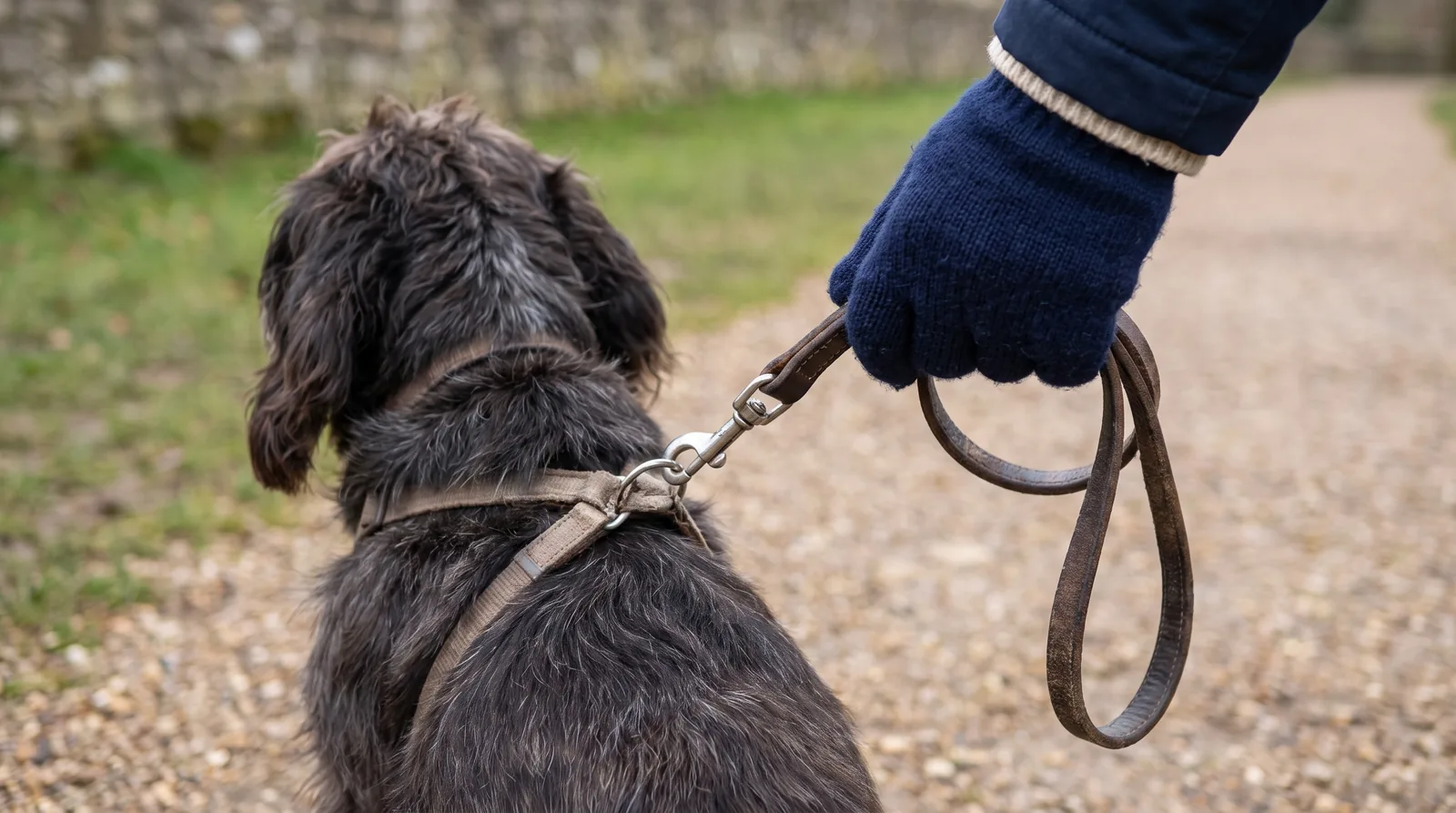
The care, custody and control trap
This is the single biggest gap in dog walker cover, and almost nobody explains it clearly. Standard public liability insurance protects you against claims from other people — a member of the public who's injured, or whose property is damaged. It does not automatically cover damage to, loss of, or injury to the dog you're actually being paid to look after.
That gap is called care, custody and control (sometimes shortened to CCC), and it has to be added separately or confirmed as included. Picture this: you're walking a client's dog off-lead in a permitted area, it bolts into traffic and is seriously injured. Without CCC cover, you could be facing the vet bills or a claim from the client, even though your public liability policy is otherwise valid. This is a common mismatch between what a walker expects and what a policy actually covers.
Before buying any policy, check explicitly whether care, custody and control is included as standard or needs to be added, and what the payout limit per animal is — some policies cap it surprisingly low relative to the value of a pedigree dog.
XL Bully and the Dangerous Dogs Act
Since the XL Bully ban took effect in England and Wales (February 2024) and Scotland (July 2024), insurers have had to decide individually whether — and how — they'll cover walkers who look after exempted XL Bullies. This is a live, fast-moving area, and coverage is genuinely inconsistent between providers, so we've mapped exactly what each one says publicly, dated.
| Provider | XL Bully stance | Detail |
|---|---|---|
| Protectivity | Does not cover | — · source |
| Pet Business Insurance | Covers, with strict conditions | Dog listed on the Index of Exempted Dogs (IED), 1:1 handler-to-dog ratio, neutered, microchipped, kept on lead and muzzled in public. · source |
| Cliverton | Unclear for this specific product | General advice page mentions optional cover for banned breeds exists somewhere in their offering, but no confirmation it applies to the dog walkers insurance product specifically, and no exact terms published. · source |
| Simply Business | Not publicly stated | — |
| Superscript | Not publicly stated | — |
| AXA Business Insurance | Not publicly stated | Their dog walkers/pet sitters page references the Dangerous Dogs Act only as general legal context, without declaring their own cover stance. |
Verified 2 August 2026. Where no public statement was found, we've said so rather than guessed — policies and public statements change, so confirm directly with the insurer before relying on this.
Protectivity has stated publicly that it no longer covers XL Bullies under its pet business insurance, citing the Dangerous Dogs Act exclusion. Pet Business Insurance will cover an exempted XL Bully, but only under strict conditions: the dog must be on the Index of Exempted Dogs, walked at a strict 1:1 handler-to-dog ratio, neutered, microchipped, and kept on a lead and muzzled in public. If you regularly walk XL Bullies, that ratio requirement alone changes your business model — you can't group-walk an exempted dog the way you might group-walk others.
For the providers marked "not publicly stated" above, that's not a claim they exclude cover — it simply means neither their website nor public sources declare a position. Ask directly before assuming either way.
What cover level do you actually need?
Most UK councils that license commercial dog walkers, and the Royal Parks for London's royal parks, require a minimum of £2 million to £5 million public liability cover before they'll issue a permit. £1 million is common for very small, informal operations, but if you plan to apply for a council licence or work in a Royal Park, check the exact figure with that specific authority — requirements are set locally and vary. Our £5 million cover guide breaks down when that higher limit is worth it versus overkill.
Do you legally need it?
Public liability insurance itself isn't a legal requirement in the UK for a sole trader — but most councils, clients and Royal Parks will functionally require it before they'll work with you, which makes it non-optional in practice. Employers' liability insurance is different: it's a legal requirement the moment you take on staff, even casually, and operating without it when required can bring fines of up to £2,500 per day. If you're a sole trader working alone, that specific requirement doesn't apply to you — but public liability still functions as the entry ticket to most paid work.
Car insurance and business use
If you drive to collect and drop off dogs, check whether your motor policy covers that business use. Personal motor policies vary, and you may need to declare business use or arrange different cover. An insurer may reject a claim if the vehicle was used outside the policy terms. This is separate from public liability insurance, so confirm the position directly with your motor insurer before relying on your existing policy.
Comparison table: dog walking insurance providers
| Provider | Advertised starting price | Notes | |
|---|---|---|---|
| Protectivity | from £5.41/month · source | Does not cover XL Bullies | Get a quote → |
| Cliverton | from £135.05/year · source | Banned-breed cover unclear for this product | Get a quote → |
| Pet Business Insurance | £1.57/week (£6.81/month) · source | Covers exempted XL Bullies with conditions | Get a quote → |
| Simply Business | from £5.05/month · source | Broker comparing multiple insurers | Get a quote → |
| Superscript | Quote-only, no public starting price | Starting price could not be independently confirmed — quote direct | Get a quote → |
| AXA Business Insurance | Quote-only, no public starting price | No published dog-walking-specific starting price — quote required | Get a quote → |
Affiliate link · AXA Business Insurance
AXA covers dog walkers as part of its business insurance range. Compare cover levels and get a quote directly on their site.
This is general information, not financial or insurance advice. Figures are advertised starting prices or indicative estimates, not personalised quotes. Some links on this page are affiliate links — see our disclaimer and methodology.
Frequently asked questions
Do I need dog walking insurance if I only walk dogs part-time?
Public liability insurance is not generally a legal requirement simply because you walk dogs part-time. However, you can still be held liable if a dog you're paid to walk injures someone or damages property, and a client, council or park licence may require cover. Ask insurers whether they offer a part-time or seasonal option and check the policy wording before buying.
Can under-18s get dog walking insurance?
Most mainstream providers, including Simply Business and Protectivity, require policyholders to be 18 or over to hold a commercial policy. If you're 16 or 17 and want to start a dog walking round, a parent or guardian typically needs to hold the policy, or you wait until you turn 18. Always check the minimum age directly with the insurer before assuming cover applies.
Is there a limit on how many dogs I can walk at once?
Insurers vary. Some standard policies cap group walks at 4-6 dogs per handler before requiring a higher-risk declaration or a bespoke quote; walking 8 or 10 dogs at once (common for full-time walkers) usually needs you to declare this explicitly, and some insurers charge more or decline cover above a set number. Always declare your real maximum group size — under-declaring can void a claim.
Does dog walking insurance work in Scotland and Northern Ireland?
Most UK-wide providers cover Scotland, England and Wales under the same policy, but Northern Ireland is sometimes excluded or requires a separate quote — the legal framework for dangerous dogs also differs slightly. Confirm explicitly with the insurer that Northern Ireland is included if that's where you operate, rather than assuming a 'UK-wide' policy covers all four nations.
What do councils and Royal Parks require for a dog walking licence?
Many UK councils that issue commercial dog walking licences, and the Royal Parks (for walking in London parks such as Richmond Park or Hyde Park), require proof of public liability cover — typically £2 million to £5 million — before granting a permit. Requirements vary by council, so check your specific local authority's licensing page for the exact minimum before buying cover.
What does dog walking insurance actually cover?
A typical policy bundles public liability (injury to people or damage to property), and often care, custody and control (damage to or loss of the dog itself), employers' liability if you have staff, and sometimes key cover, equipment cover and personal accident. Cover varies significantly by provider — always read the policy wording, not just the marketing page, before assuming a specific risk is included.
Affiliate link · QuoteSearcher
Want a broker to shop around several insurers for you? QuoteSearcher matches you with a specialist broker for a public liability quote.